OpenAI and Anthropic Say They Broke the Same “Unbreakable” Law of Computing. Six Hours Apart.
Two AI labs say a 27-year-old hypothesis is false, and that their machines found the proof on the same day. Science has had twins like this for four hundred years, and a long file of fights over who came first. It has never had them this often.
same ingredients, same cake
trying to answer →Why do AI products converge?
Office of Priority Disputes · Twin Discoveries Division
In the matter of
The Exponential Time Hypothesis (Impagliazzo and Paturi, 1999)
Claimants
- OpenAI, for an internal model
- Anthropic, for Claude (the paper's only listed author)
Docket no.
2026-ETH-1016
Filed
27 Oct 2026
Monday 26 October 2026, 21:36 UTC · Tuesday 27 October, 04:00 UTC
21:36
26 Oct 2026 · UTC
OpenAI
“The Exponential Time Hypothesis is false.”
04:00
27 Oct 2026 · UTC
Anthropic
“A 2ᵒ⁽ⁿ⁾ time algorithm for 3-SAT.”
6 h 24 m
Monday night, 21:36 UTC. A researcher at OpenAI posts that the company’s AI has proved one of the load-bearing assumptions of computer science false.
At 04:00 the next morning, a researcher at Anthropic posts that Claude has too.
Different paper, different proof, same verdict. Then the detail that made people stop scrolling: both companies say their machines found it on the same day, Friday 16 October.Times from Papex and AI Lately, 27 October 2026. Anthropic’s paper has one author. Its name is Claude.Anthropic’s Levent Alpöge: the core algorithm “was found on October 16 by an internal Claude research model with 14M output tokens and no human input.”
Clerk's daybook · October 2026 · all times UTC
| No. | Entered | Particulars | Remarks |
|---|---|---|---|
| 1 | Fri 16 Oct | OpenAI: internal model writes a disproof of ETH | Per OpenAI |
| 2 | Fri 16 Oct | Anthropic: Claude research model finds the core algorithm | Per Anthropic. 14M output tokens, no human input |
| 3 | Sat 17 Oct | OpenAI: proof formalized in Lean | Covers a slightly weaker bound |
| 4 | Mon 26 Oct, 20:52 | OpenAI: paper and Lean proof posted to GitHub | 67 pages |
| 5 | Mon 26 Oct, 21:36 | OpenAI researcher announces on X | |
| 6 | Tue 27 Oct, 03:07 | Anthropic: paper and Lean proof posted to GitHub | 49 pages; author: "Claude, Anthropic" |
| 7 | Tue 27 Oct, 04:00 | Anthropic researcher announces on X |
The matter
Picture a row of light switches and a list of rules. Switch 3 or switch 7 must be on. Switch 2 must be off, or switch 9 on. Is there any setting that obeys every rule at once?
That’s a puzzle called 3-SAT, and it’s harder than it looks. Every switch you add doubles the number of settings to check. Forty switches is a trillion settings. Clever algorithms do better than checking them all, but for decades every one of them still slowed down exponentially as the list grew.
In 1999, Russell Impagliazzo and Ramamohan Paturi turned that experience into a rule: no trick will ever escape the exponential. They called it the Exponential Time Hypothesis. Nobody proved it, but almost everybody believed it, and hundreds of papers in graph theory, biology, databases and geometry were built on top of it.OpenAI’s announcement lists the fields. The hypothesis is due to Impagliazzo, Paturi and Francis Zane.
Exhibit A
The claim, as filed by both parties
Both labs claim an algorithm that escapes the exponential. It counts every solution, not just one, and its running time grows a little slower than any exponential, with the same leading term in both papers.
Neither is fast in practice. Anthropic’s paper says the result “says nothing about solving formulas in practice.” Neither settles P versus NP.
But if it holds, a floor a whole field stood on has a hole in it.
Both bounds have an exponent of about n·log log n / √(log n).OpenAI’s scope note. OpenAI’s paper is 67 pages; Anthropic’s is 49. Two machines, working apart, found the same hole on the same day. That sounds like a coincidence. The file of prior cases says it’s closer to a rule.
Prior cases
Case of 1712
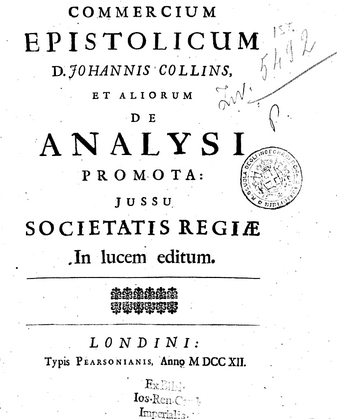
Newton v. Leibniz: calculus
Newton worked out calculus around 1666 and told almost no one. Leibniz found it on his own around 1675, with better notation, and published first.
The fight that followed was one of the ugliest in science. In 1712 the Royal Society appointed a committee to decide who came first. Its report, the Commercium Epistolicum, found for Newton.
The report was drafted, anonymously, by Newton himself. Newton was the Society’s president.
Woolsthorpe, 1666 · Paris, 1675

Calculus, 1666
Isaac Newton
Works out his "method of fluxions" and tells almost no one.
Godfrey Kneller, 1689. Public domain.

Calculus, 1675
Gottfried Leibniz
Invents it again, with better notation, and publishes first.
Christoph Bernhard Francke, c. 1695. Public domain.
~9 years
The fight outlived Leibniz, who died in 1716.Leibniz–Newton calculus controversy, Wikipedia.
Case of 1858

Darwin and Wallace: natural selection
Darwin had natural selection by 1838 and spent twenty years gathering evidence.
In 1858 a letter arrived from a young collector in the Malay Archipelago, Alfred Russel Wallace, describing the same theory.
Darwin’s friends arranged for both to be read to the Linnean Society on the same evening, 1 July 1858, and printed side by side. Neither man was in the room. The only case in this file settled by sharing.
London, 1838 · Ternate, Malay Archipelago, 1858
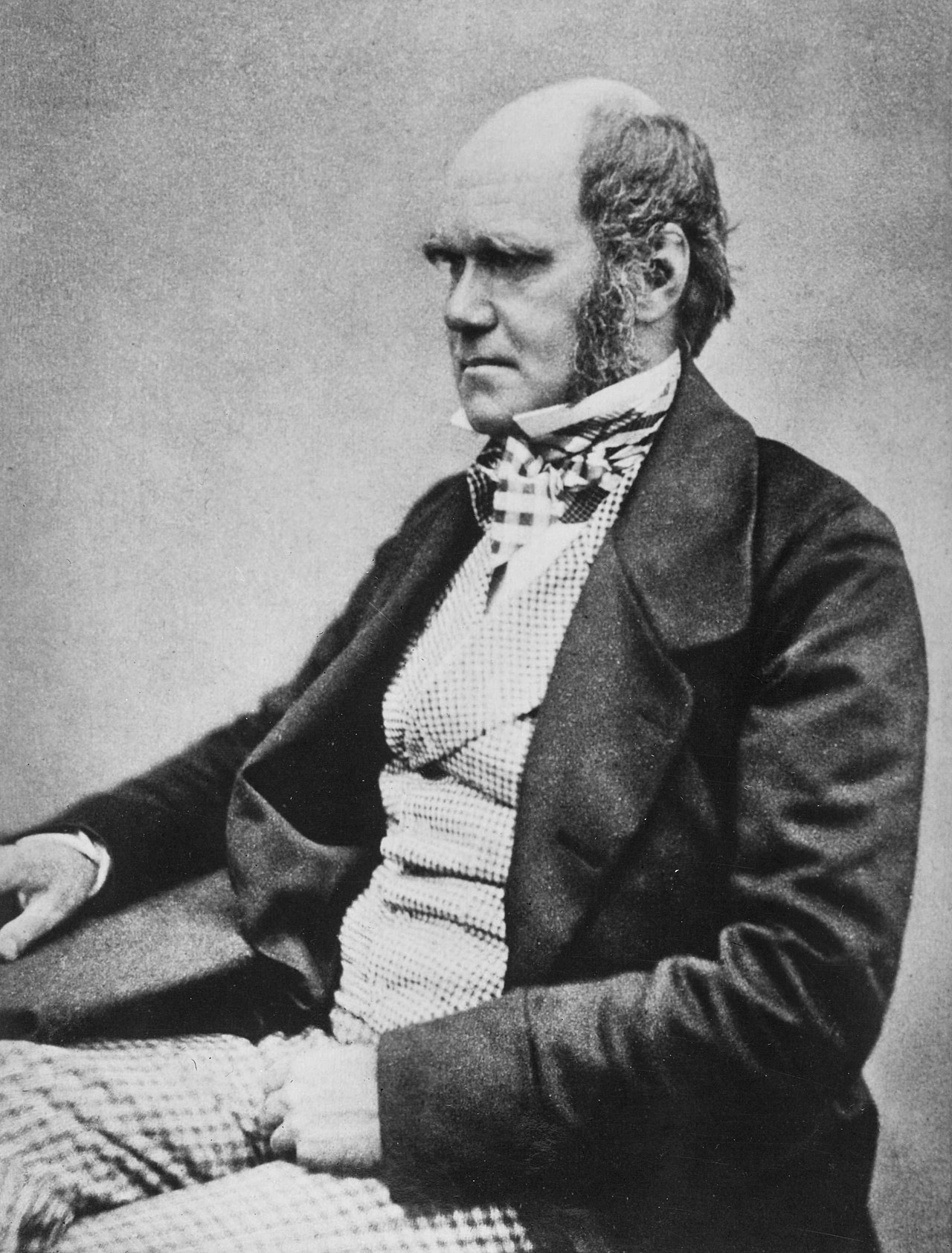
Natural selection, 1838
Charles Darwin
Has the idea, fills notebooks, and waits twenty years.
Maull & Fox, c. 1854. Public domain.
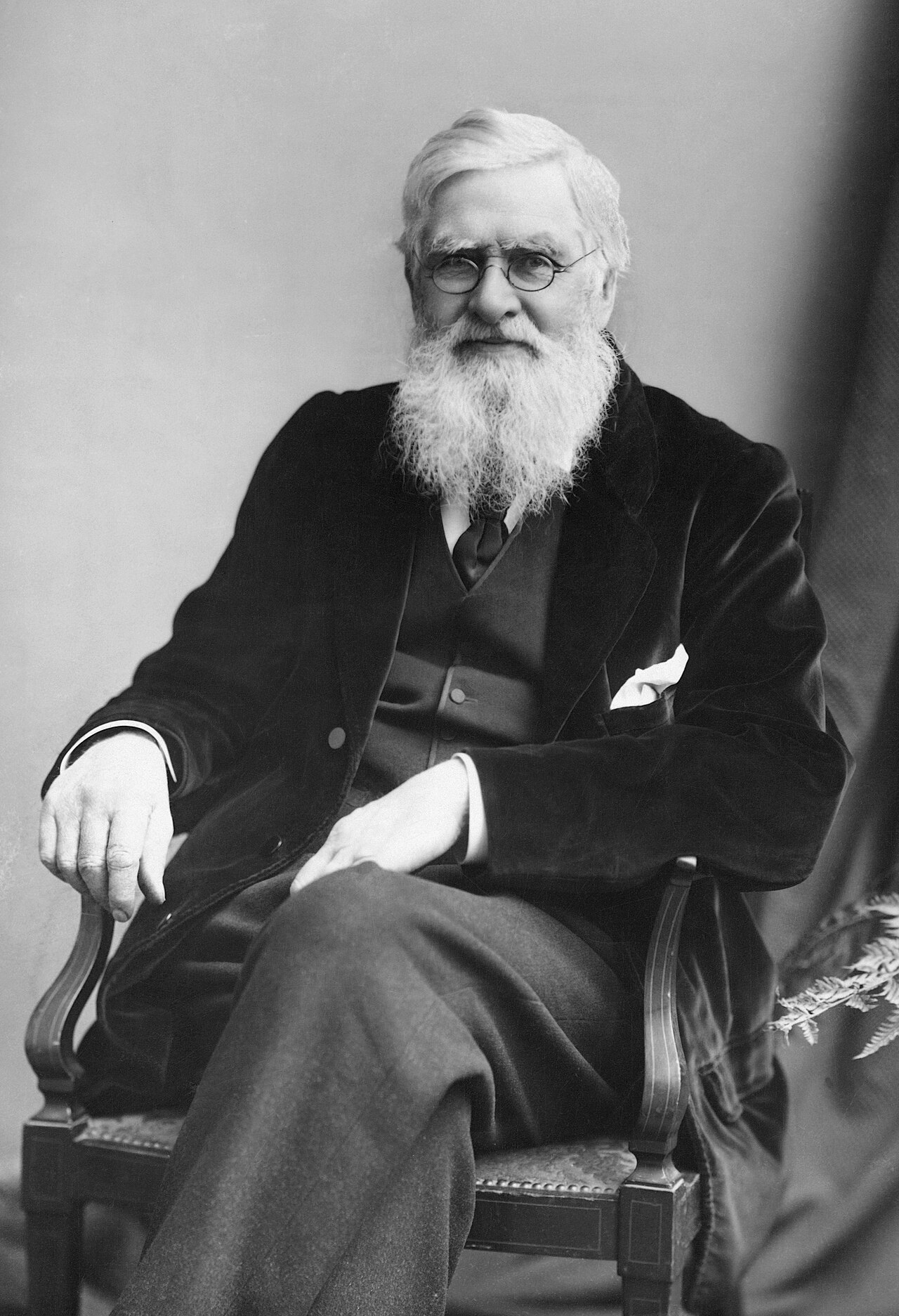
Natural selection, 1858
Alfred Russel Wallace
Has the same idea in a fever, and mails it to Darwin.
London Stereoscopic Company, c. 1895. Public domain.
20 years
Case of 1876

Bell v. Gray: the telephone
On 14 February 1876, Bell’s lawyer filed a patent application for the telephone in Washington. Bell himself was in Boston and didn’t know.
The same day, Elisha Gray’s lawyer filed a caveat, a notice that Gray was working on a very similar invention.
The patent went to Bell on 7 March. Years of lawsuits followed. Bell won, and you know his name.
The clerk’s book from that day is where the case turned.
U.S. Patent Office · cash blotter · 14 February 1876
| No. | Entered | Particulars | Remarks |
|---|---|---|---|
| 5 | Before noon | A. G. Bell: application, "Improvement in Telegraphy" | Lawyer asks for the fee to be entered at once and the papers taken straight to the examiner |
| 39 | Late afternoon | E. Gray: caveat, "Instruments for transmitting and receiving vocal sounds telegraphically" | Left in the in-basket; reached the examiner the next day |
So two labs, six hours apart, isn’t new. The telephone was hours too, and the order was decided by a clerk’s pen.Library of Congress; Elisha Gray and Alexander Bell telephone controversy, Wikipedia.
U.S. Patent Office, Washington · 14 February 1876

Entry no. 5 · application
Alexander Graham Bell
His lawyer files a patent application.
Bell’s patent drawing, 1876. National Archives, public domain.

Entry no. 39 · caveat
Elisha Gray
Files a notice of the same invention, the same day.
Portrait of Elisha Gray. Public domain.
hours
The clerk’s finding

In 1922 two sociologists at Columbia, William Ogburn and Dorothy Thomas, went looking through the files for twins like these. They found 148: oxygen, logarithms, photography, the steamboat, Neptune, the conservation of energy (four people in one year).Ogburn and Thomas, “Are Inventions Inevitable? A Note on Social Evolution,” Political Science Quarterly, 1922. Forty years later the sociologist Robert Merton argued that twins aren’t the exception in science. They’re the rule. Once the pieces a discovery needs are lying around, and enough people are looking in the same place, the discovery becomes “virtually inevitable.” Who gets there first is mostly timing.Merton, “Resistance to the Systematic Study of Multiple Discoveries in Science”, 1963.
Put the famous twins on one schedule and something odd shows up. The gaps aren’t shrinking. They’re all over the place: twenty years for natural selection, hours for the telephone.
So if the speed isn’t new, what is?
What’s new in this case
Two things: who the twins are, and how often they turn up.
In May, OpenAI’s model disproved a conjecture Paul Erdős posed in 1946, about how many pairs of points on a plane can sit exactly one unit apart. Days later, Anthropic said its model had independently found a proof too, working offline so it couldn’t see OpenAI’s.OfficeChai, 26 May 2026. The Fields medallist Tim Gowers said he would have recommended OpenAI’s proof to the Annals of Mathematics. In September the two labs ended up in a public argument over a pair of related fluid-dynamics proofs. Now this. The mathematician Daniel Litt put it simply in August: the models, and the people using them, “seem to be solving the same problems.”Daniel Litt, “The End of Mathematics”, 11 August 2026.
Merton’s explanation fits almost too well. His twins needed two things: the same ingredients, and attention pointed at the same problem. For Newton and Leibniz that took a shared century of mathematics. For two AI labs it’s the design. They train on largely the same written record and run on the same kinds of chips. They aim at the same public lists of famous open problems, and check the answers with the same proof software, Lean.
Merton’s twins needed the same century. These need the same training data.
And look at how the old fights were settled: a committee report written by one of the parties, a joint reading arranged by friends, a clerk’s ledger. This one is being settled by timestamps on GitHub. OpenAI says it doesn’t seek academic credit. Anthropic gave the credit to the machine.
In 1876 the twins were two inventors, each with a lawyer. In 2026 they’re two machines that read the same library, set loose on the same list. Expect the file to get much thicker.
Status of the examination
One thing hasn’t happened yet: anybody outside the two companies confirming either proof.
OpenAI asked the people best placed to check its work. Impagliazzo and Paturi, who proposed the hypothesis, and Ryan Williams of MIT are organizing an open examination. They wrote to their colleagues that their involvement “should not be taken as certification of the claim.” OpenAI agreed to publish its raw data and fund a conference on the result.Open letter quoted by The Next Web, 26 October 2026.
Both proofs have passed a machine check in Lean, and Anthropic re-ran its proof through a second, independent checker. But a machine check confirms that a formal statement follows from its definitions. Whether that statement is really the claim in the paper is a judgment for people. OpenAI’s own Lean proof covers a slightly weaker bound than its paper’s headline.
So the honest version of this story ends mid-file. Two machines say a hole has opened in the floor of computer science. Three people who spent their careers standing on that floor are reading the proofs now.
Under examinationOpenAI · 67 pp. · Anthropic · 49 pp. · Referees: Impagliazzo, Paturi, Williams
I’ll update this file when the referees report.